
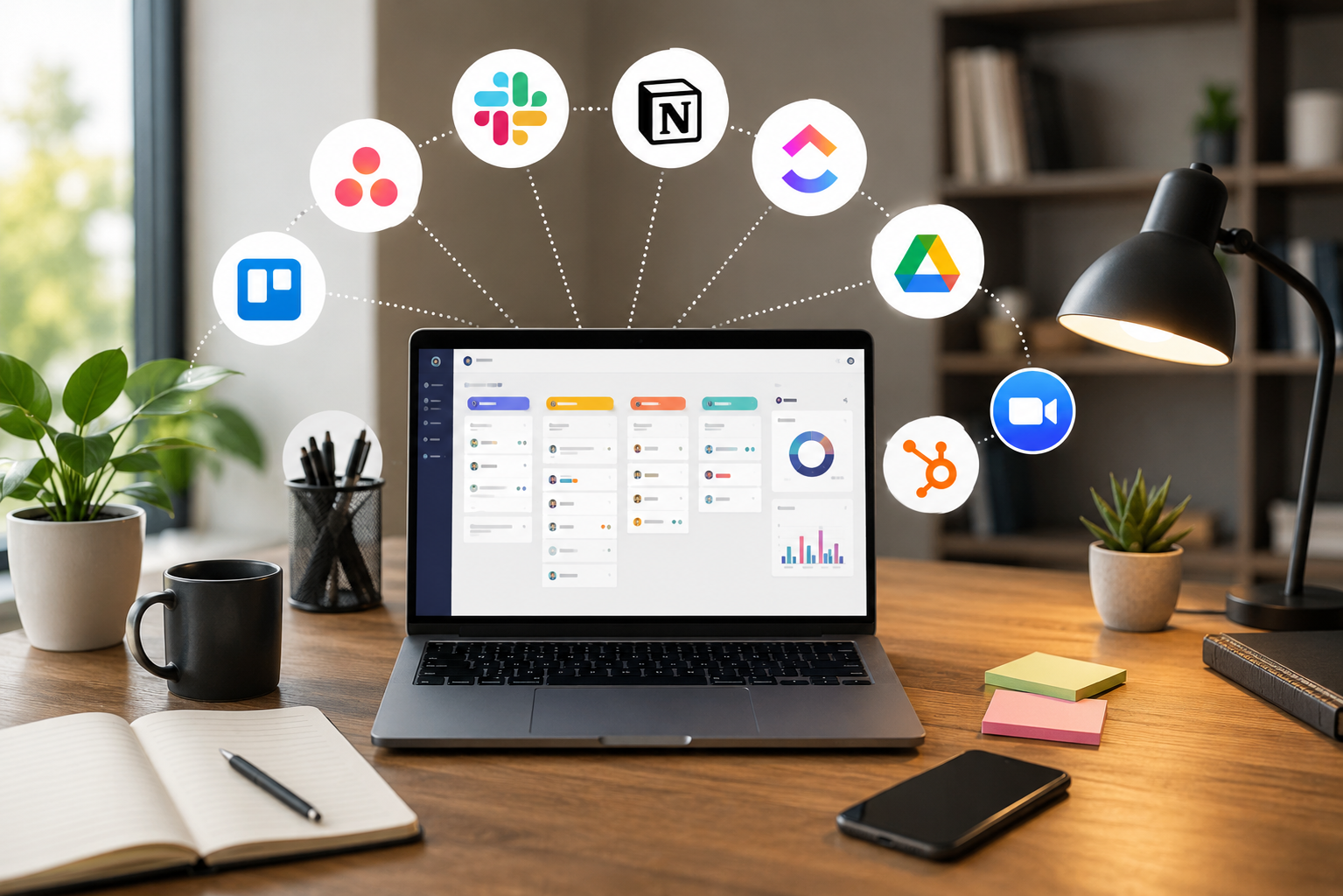
The rise of remote work has fundamentally transformed how marketing teams operate. From content creation and campaign management to team communication and analytics reporting, distributed marketing teams rely heavily on digital tools to maintain productivity, collaboration, and accountability.
According to recent workplace studies, remote and hybrid teams continue to outperform traditional office-based structures when equipped with the right technology stack. However, productivity challenges such as communication gaps, project visibility issues, missed deadlines, and fragmented workflows can significantly impact marketing performance.
This is where productivity apps become indispensable.
The best productivity apps for remote marketing teams help streamline workflows, improve collaboration, centralize information, automate repetitive tasks, and ensure campaigns move forward efficiently. Whether you’re managing a content marketing team, SEO specialists, PPC managers, social media marketers, or a full-service digital marketing department, selecting the right tools can dramatically improve output and team satisfaction.
In this comprehensive guide, we’ll explore the best productivity apps for remote marketing teams, their key features, benefits, pricing considerations, and how to build a high-performing remote marketing technology stack.
Why Productivity Apps Matter for Remote Marketing Teams
Marketing departments handle numerous moving parts simultaneously:
- Content creation
- SEO optimization
- Social media management
- Email marketing
- PPC campaigns
- Analytics reporting
- Client communication
- Team collaboration
Without a centralized productivity ecosystem, teams often experience:
- Missed deadlines
- Information silos
- Poor communication
- Duplicate work
- Reduced accountability
- Lower campaign performance
Productivity apps help address these challenges by creating a structured environment in which marketers can collaborate effectively regardless of location.
Key benefits include:
- Enhanced team communication
- Improved project visibility
- Faster campaign execution
- Better resource management
- Increased accountability
- Reduced operational inefficiencies
1. Asana – Best for Marketing Project Management
When discussing productivity apps for remote marketing teams, Asana consistently ranks among the top solutions.
Marketing teams frequently juggle multiple campaigns across various channels. Asana provides a centralized platform for planning, tracking, and executing projects.
Key Features
- Campaign planning dashboards
- Task dependencies
- Workflow automation
- Calendar views
- Timeline visualization
- Marketing templates
- Team workload management
Why Marketing Teams Love Asana
Asana allows managers to visualize campaign progress while giving team members clear task ownership.
Content calendars, SEO projects, social media campaigns, and product launches can all be managed from one platform.
Best For
- Content marketing teams
- SEO agencies
- Digital marketing departments
- Enterprise marketing operations
2. Slack – Best Team Communication Platform
Remote marketing success depends heavily on effective communication.
Slack has become the standard communication hub for distributed teams worldwide.
Key Features
- Organized channels
- Direct messaging
- Audio and video calls
- Workflow automation
- File sharing
- Integration with thousands of apps
Marketing Team Benefits
Slack minimizes email overload while keeping conversations searchable and organized.
Teams can create dedicated channels for:
- SEO campaigns
- Content production
- Social media
- Client communication
- Performance reporting
This ensures everyone stays aligned without constant meetings.
Best For
- Remote-first organizations
- Marketing agencies
- Cross-functional teams
3. ClickUp – Best All-in-One Productivity App
ClickUp has rapidly gained popularity among remote marketing teams due to its comprehensive feature set.
It combines:
- Task management
- Documentation
- Goal tracking
- Time tracking
- Collaboration tools
into a single platform.
Key Features
- Custom dashboards
- Marketing workflow templates
- Document collaboration
- Campaign tracking
- Team goals
- Automation features
Why ClickUp Stands Out
Instead of using multiple tools, marketing teams can centralize operations within ClickUp.
This reduces software sprawl and improves workflow efficiency.
Best For
- Growing marketing teams
- Startups
- Agencies seeking tool consolidation
4. Notion – Best Knowledge Management Tool
Marketing teams generate large volumes of information.
From content briefs and SEO strategies to brand guidelines and campaign documentation, keeping information organized is critical.
Notion serves as a powerful digital workspace.
Key Features
- Collaborative documents
- Internal wikis
- Project databases
- Content calendars
- SOP management
- AI-assisted writing
Marketing Applications
Teams use Notion for:
- Content planning
- SEO documentation
- Editorial workflows
- Campaign briefs
- Meeting notes
A well-structured Notion workspace can become the central source of truth for the entire marketing department.
Best For
- Content teams
- SEO departments
- Remote knowledge-sharing environments
5. Trello – Best Visual Task Management App
Trello remains one of the easiest productivity tools for remote marketing teams.
Its Kanban-based approach makes campaign management highly visual.
Key Features
- Drag-and-drop boards
- Campaign tracking
- Task assignments
- Due dates
- Integrations
- Workflow automation
Marketing Use Cases
Marketers often create boards for:
- Editorial calendars
- Social media workflows
- Lead generation campaigns
- Product launches
The intuitive interface allows teams to get started quickly without extensive training.
Best For
- Small teams
- Freelance marketers
- Startups
6. Google Workspace – Best Collaboration Suite
Google Workspace remains essential for remote marketing productivity.
The platform includes:
- Google Docs
- Google Sheets
- Google Slides
- Google Meet
- Google Drive
Key Features
- Real-time collaboration
- Cloud storage
- File sharing
- Team communication
- Document version control
Why Marketing Teams Need It
Content creators, SEO specialists, analysts, and managers can collaborate simultaneously without worrying about file conflicts.
Google Workspace also integrates seamlessly with most marketing platforms.
Best For
- Teams of all sizes
- Cross-functional collaboration
- Client-facing marketing work
7. Monday.com – Best for Campaign Visibility
Monday.com offers powerful visual project management capabilities designed for modern marketing teams.
Key Features
- Campaign dashboards
- Resource management
- Workflow automation
- Team collaboration
- Reporting tools
Marketing Advantages
Marketing managers gain visibility into:
- Campaign status
- Team capacity
- Budget allocation
- Deliverable tracking
This helps improve strategic decision-making and project execution.
Best For
- Mid-sized organizations
- Enterprise marketing teams
- Multi-channel campaigns
8. Loom – Best Productivity Tool for Async Communication
Meetings can become productivity killers for remote teams.
Loom solves this problem through asynchronous video communication.
Key Features
- Screen recording
- Video messaging
- Instant sharing
- Team collaboration
- Workflow explanations
Marketing Team Benefits
Instead of scheduling meetings, marketers can quickly record:
- Campaign walkthroughs
- Analytics reviews
- Content feedback
- SEO audits
This reduces interruptions while maintaining communication quality.
Best For
- Global teams
- Agencies
- Distributed marketing departments
9. Zapier – Best Workflow Automation Platform
Automation is one of the biggest productivity drivers for marketing teams.
Zapier connects thousands of applications and automates repetitive processes.
Key Features
- No-code automation
- Multi-step workflows
- CRM integrations
- Marketing app integrations
- Data synchronization
Marketing Automation Examples
- Lead capture automation
- Reporting workflows
- Social media publishing
- Email list management
- CRM updates
Automating repetitive tasks frees marketers to focus on strategy and creativity.
Best For
- Growth marketing teams
- Agencies
- Automation-focused organizations
10. HubSpot – Best CRM and Marketing Productivity Platform
HubSpot combines marketing automation, CRM management, content marketing, and analytics into one ecosystem.
Key Features
- CRM management
- Email marketing
- Workflow automation
- Campaign tracking
- Reporting dashboards
Why Marketing Teams Choose HubSpot
HubSpot centralizes customer interactions and marketing operations, reducing tool fragmentation.
Its reporting capabilities also provide valuable performance insights.
Best For
- Inbound marketing teams
- B2B organizations
- Marketing and sales alignment
How to Choose the Best Productivity Apps for Remote Marketing Teams
Not every marketing team requires the same productivity stack.
Consider the following factors:
Team Size
Small teams may succeed with:
- Trello
- Slack
- Google Workspace
Larger organizations often benefit from:
- Asana
- Monday.com
- HubSpot
Workflow Complexity
Complex marketing operations require:
- Advanced automation
- Detailed reporting
- Resource management
Simple workflows may only need basic task management tools.
Integration Requirements
Choose apps that integrate seamlessly with:
- CRM systems
- Analytics tools
- Email marketing platforms
- Social media management tools
Budget
Evaluate:
- Monthly subscription costs
- Scalability
- Return on investment
- Training requirements
Recommended Productivity Stack for Remote Marketing Teams
For maximum productivity, consider the following combination:
Communication
Project Management
Documentation
Collaboration
Automation
CRM and Marketing Operations
Async Communication
Together, these tools create a highly efficient remote marketing ecosystem capable of supporting content creation, campaign management, lead generation, and performance analysis.
Common Productivity Challenges Remote Marketing Teams Face
Even with excellent tools, teams may encounter obstacles.
Tool Overload
Using too many platforms can create confusion and reduce efficiency.
Poor Adoption
Without proper onboarding, team members may fail to utilize productivity tools effectively.
Communication Gaps
Tools should support communication—not replace strategic discussions.
Lack of Standardization
Documented workflows and SOPs remain essential for productivity success.
Future Trends in Marketing Team Productivity
As remote work continues evolving, productivity software is becoming increasingly intelligent.
Emerging trends include:
- AI-powered workflow automation
- Predictive project management
- Smart scheduling
- Automated reporting
- AI content collaboration
- Integrated marketing operations platforms
Organizations that embrace these innovations will gain significant competitive advantages in efficiency and campaign execution.
Conclusion
The success of remote marketing teams depends heavily on the technology they use. The best productivity apps for remote marketing teams eliminate inefficiencies, improve communication, streamline campaign execution, and enhance collaboration across distributed workforces.
Platforms such as Asana, Slack, ClickUp, Notion, Trello, Google Workspace, Monday.com, Loom, Zapier, and HubSpot have become essential tools for modern marketing organizations seeking sustainable growth and operational excellence.
Rather than adopting every available platform, focus on building a carefully selected productivity stack aligned with your team’s goals, workflows, and budget.
When implemented strategically, the right productivity tools can transform remote marketing operations, enabling teams to deliver exceptional results regardless of where they work.
Author: Winay Bari

Leave a Reply